25 August 2008

Death From Above 1979

You're A Woman, I'm A Machine
Last Gang, 2004

I was living in Melbourne listening to twee indie records a few years ago when a really hot drummer friend of mine who had a mop of black hair and wore bracelets on his wrists invited me into his bedroom and pulled out a little pink album full of heavy-metal love songs. It was really quite sexy, now that I think of it. Anyway the album was called You're A Woman, I'm A Machine and had a picture of two men with elephant trunks instead of noses on the cover. It blew me away – all the more for having binged on nothing louder than Belle & Sebastian for God knows how long beforehand. The first song that I remember being able to actually hear, after the ringing in my ears subsided, was a menacing grind of bass and testosterone that sounded as if it had burst from the loins of someone in exceptionally tight jeans, set to lyrics about... falling in love and settling down? Sure, why not. "Come here baby, I love your company/ We could do it and start a family," panted drummer and singer Sebastien Grainger, like he was overdubbing a porn film. The track was 'Romantic Rights' and the band was a duo from Canada called Death From Above 1979.

A few months later Death From Above 1979 played their second and last Australian tour, to plug their first and only album. I went along to the Ding Dong Lounge with a few of the other journalists from Beat and argued my way inside with them. It was just Grainger and bassist Jesse F. Keeler on stage. Their set was the loudest thing I have ever heard. People moved to the back of the room and clamped their hands over their ears. Some took refuge in the stairwell. One guy, who hadn't been drinking, threw up from the bass. Somehow, and I'm still not sure how this is even possible, petite deputy editor Melanie Sheridan spent the whole night in the front row. The next day none of us could get it together to write a review, so Sheridan printed a copy of the emails that had been sent between us complaining about the door bitch who didn't have our names written down and how much the music had made us want to fuck. Soon afterwards Death From Above broke up. We lived with nasty looks at Ding Dong, while Grainger and Keeler began making electronic music under the names MSTRKRFT and The Rhythm Method respectively.

18 August 2008

Iggy Pop

Lust For Life
RCA, 1977

David Bowie and Iggy Pop met each other as one was on the way up and the other was on the way out. Bowie had just released Hunky Dory and started work on the record that would catapult him to fame in the guise of spandex-loving space alien Ziggy Stardust. Pop meanwhile was in limbo. His band The Stooges had been dropped from the Elektra record label a few months earlier, after two albums of dark and guttural rock and roll that were critical and commercial flops. Decades later The Stooges and Fun House would be hailed as one of the major inspirations for a generation of punk and heavy metal bands, but in 1971 Pop was just another misfit with a heroin problem. Bowie encouraged the Detroit musician to move to London, where The Stooges reformed to record their third and final album of the period, Raw Power. Bowie's input as producer failed to make it much more popular than the previous two, and in 1974 the band called it quits (before suffering a collective mid-life crisis and reforming in 2005).

While The Stooges were embarking on their final tour, Bowie was reinventing himself after having retired his persona of Ziggy Stardust. He recorded an album inspired by George Orwell's sci-fi dystopia 1984 called Diamond Dogs, and then plundered Philadelphia soul music to create the pure pop of Young Americans. Rumours circled of his heavy cocaine use. He appeared on television shows gaunt, pale and nervous and began embodying a new character called The Thin White Duke. In 1976 he and Pop, who had tried to kick his heroin habit in a mental institution after the break-up of The Stooges, relocated to West Berlin together to dry themselves out. Sharing an apartment they created Pop's first solo records The Idiot and Lust For Life, with Bowie writing much of the music and Pop the lyrics. They charted higher than any of The Stooges records had and made him a bonafide rock and roll star, especially in Britain. In 1996 the title track of Lust For Life was introduced to a new generation as the theme song of sorts for heroin-chic film Trainspotting. Later still its drum beat – which was itself largely pilfered from the Motown classic 'You Can't Hurry Love' – was lifted without alteration and used by Jet in their 2003 hit 'Are You Gonna Be My Girl'.

11 August 2008

David Bowie

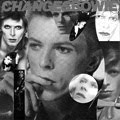
Changesbowie
EMI, 1990

Every year another critic decides it is their turn to announce the death of pop music, or at least its impending demise. Such articles are infinitely boring and more often than not mean the author is getting old and wishes they were young again, or simply couldn't think of anything more interesting to write before deadline. Sometimes they do make me wonder, though. Will we ever get to see another group like The Beatles, or more importantly, another David Bowie? I should stress that even if we don't, it doesn't mean the end of pop music. Perhaps it just means the end of rock stars, and by that I don't mean whichever singer is on the cover of Rolling Stone this month. I mean the kind of rock and roll deity that can inspire an entire generation, or inhale ridiculous quantities of drugs and play to sold-out stadiums for five decades running, or, in Bowie's case, have twelve records in the top ten charts in eighteen months and who can be equally famous as a cross-dressing space alien in London, a white man playing funk music on Soul Train in Chicago and an experimental pop composer writing songs about the wall in Berlin.

Bowie, born David Robert Jones, had his first hit in 1969 with 'Space Oddity', a fey acoustic song about an astronaut with overtones of drug use released a few days before the Apollo 11 moon landing. He returned a few years later in the guise of Ziggy Stardust, a glam-rock sex god from outer space who came to Earth to offer hope in the face of the Apocalypse, and after giving up that persona attempted to write a musical based on George Orwell's 1984. He then travelled to the US and reinvented himself as an icon of "plastic soul", a sugary mix of black funk and soul music, and later to Berlin where he recorded a trilogy of low-key works with minimalist composer Brian Eno and producer Tony Visconti. And that's just the first half of his career. As a teenager I used to lie in my bedroom listening to the singles album Changesbowie on repeat, underneath a giant poster of Aladdin Sane. It was one of the records my mother's boyfriend lent to me and I think I wore it out. To this day I have never heard a more perfect collection of pop songs. Bowie forever.

4 August 2008

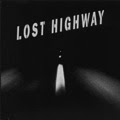
Lost Highway

Various Artists
Lost Highway
Nothing / Interscope, 1996

The Smashing Pumpkins, wallowing in the hangover of their hit album Mellon Collie and dealing with the fallout from a touring member's heroin overdose, weren't the only band in flux in 1996. Trent Reznor of Nine Inch Nails was suffering from a similar affliction in the wake of The Downward Spiral, an album that had turned him into the pin-up boy for malcontent but that was so overwrought it couldn't possibly be topped. He had begun working instead with David Bowie, who was mid-way through one of his own regular musical reinventions. Lurking in the shadows was Brian Warner, who was about to go from Reznor's session musician and part-time freak to the world's most hated man as Marilyn Manson. All four names came together to contribute to the soundtrack of David Lynch's Lost Highway.

The film was about a paranoid musician who murders his wife and suffers a psychotic break while in jail, imagining himself as – or to take it literally, transforming into – a young mechanic who has an affair with the same woman in an earlier life. The alternate reality plays out like the sexual subconscious of a traumatised boy, awkward in some parts and sadomasochistic in others, shot in a lush visual style that could be classed as artistic erotica. The soundtrack was just as extravagant, alternating between dark pop songs and the sultry jazz pieces of Angelo Badalamenti and Barry Adamson. There is one saxophone solo in particular that, I sometimes think, would actually drive someone insane if they didn't already have a tolerance for sound – like what would happen if a person drank twenty cocktails on their first ever night out.

The most decadent songs were from The Smashing Pumpkins and Marilyn Manson. The former's contribution, 'Eye', was a bittersweet electronic track with a slow pulse and a synthesiser designed to sound like a harpsichord that bloomed into pure aural ecstasy. Manson's 'Apple Of Sodom' was predictably sacrilegious, but unlike most of his later work went for a sustained feeling of revulsion over flashy shock value. The most disappointing were Reznor's two original pieces 'The Perfect Drug' and 'Driver Down'. The songs themselves were fantastic, weaving the sounds of drum'n'bass and jazz into his trademark industrial noise. The problem was that instead of elaborating on that style on his next album, Reznor tried to recreate his persona as the most tortured man alive and made a mockery of himself along the way.